Asset Intelligence
Autonomous Asset Tracking
Automated tracking of assets, data flows, data classification and more. Without getting in your team's way.
Trusted by
Intelligence
Deep understanding superficial overview

Lucas de Araújo
Co-Founder & CTO
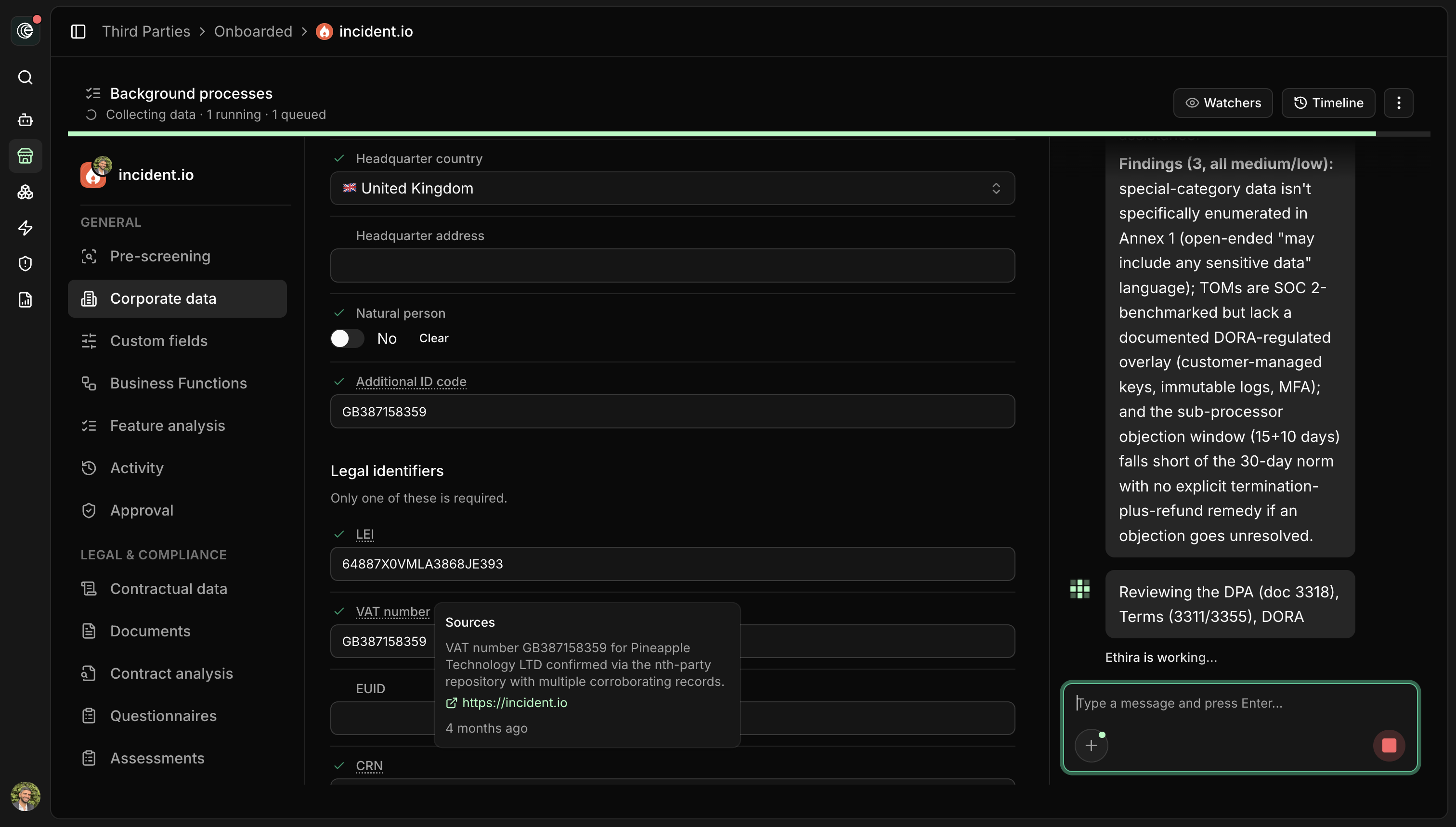
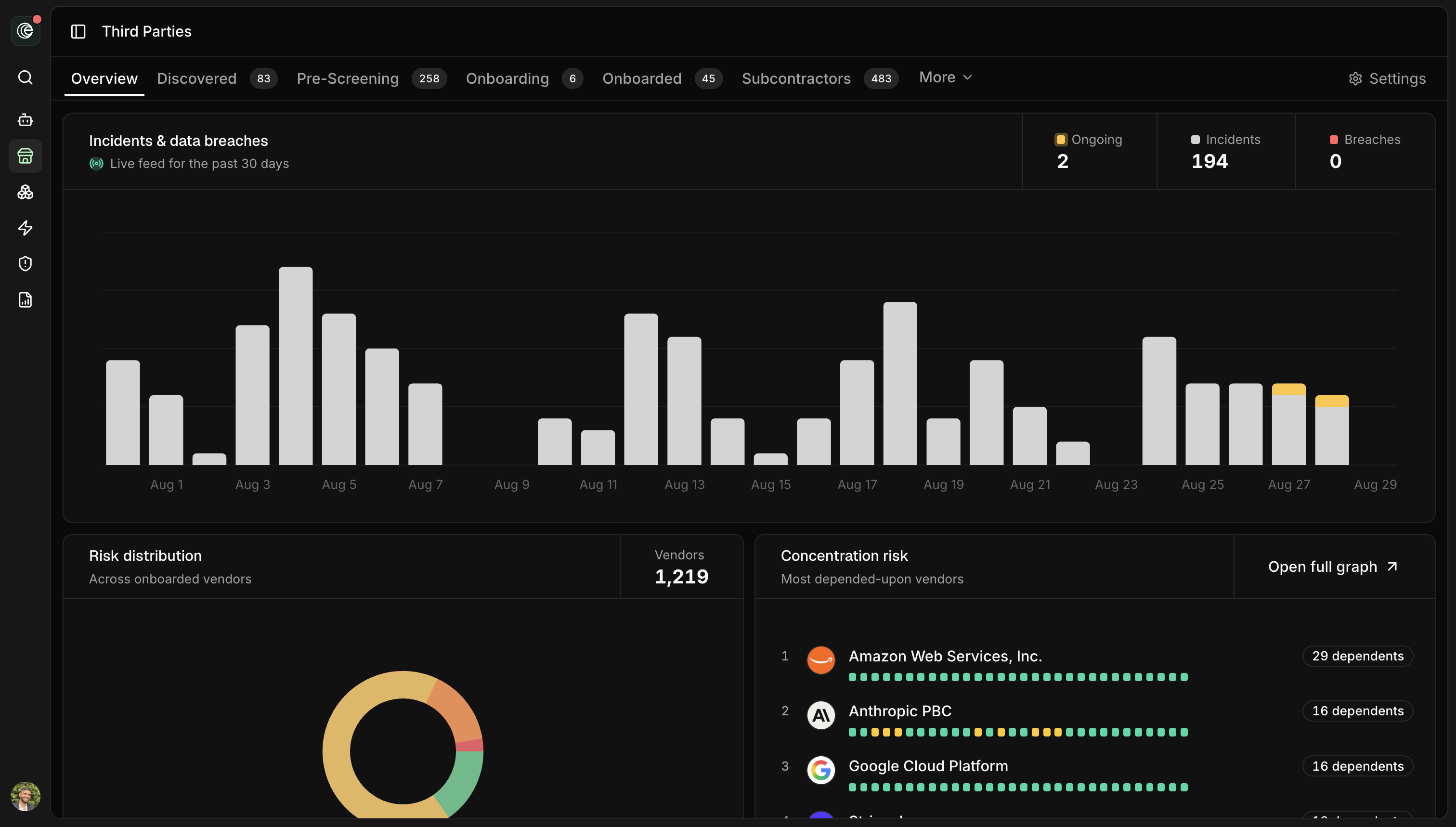
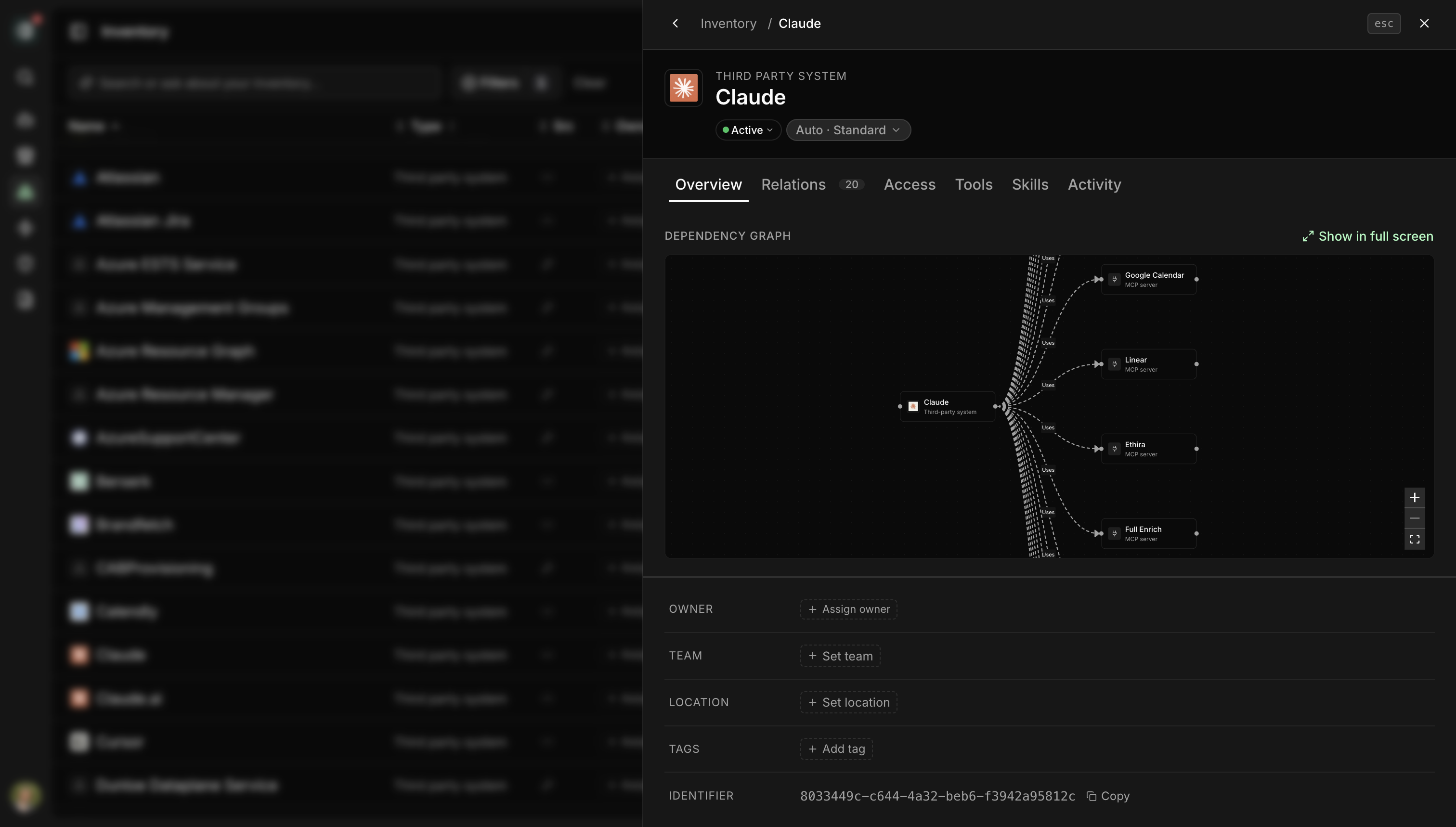
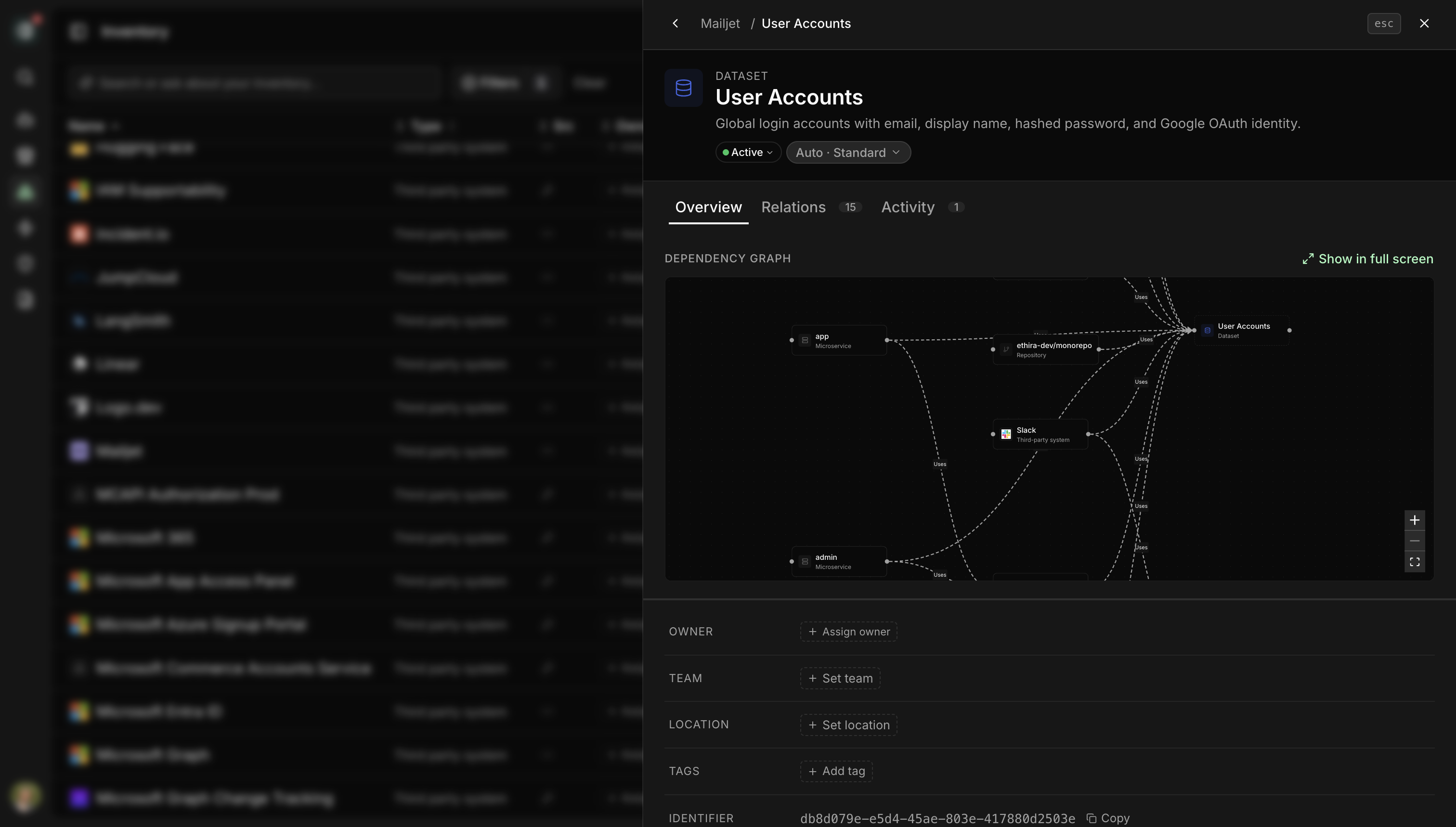
We set our ambition on building a real autonomous asset inventory that can adapt to different business cases. We were thinking not only about table and column representations, but also about criticality assessments, data flow mappings, data classification, dependency mapping, and other activities that are mandatory and often overlooked.
Moreover, our asset intelligence capability was built with automation in mind. We understand that the introduction of coding agents and similar tools has accelerated the pace at which teams change, create, and decommission assets, and our goal has been to let teams follow best practices and rules without killing productivity.
We believe that a competent asset intelligence capability should serve not only technology teams but also security and legal teams that depend on accurate and up-to-date information to do their best work. For us, competent asset intelligence paired with capable automation represents a major disruption of the status quo among existing tools on the market.
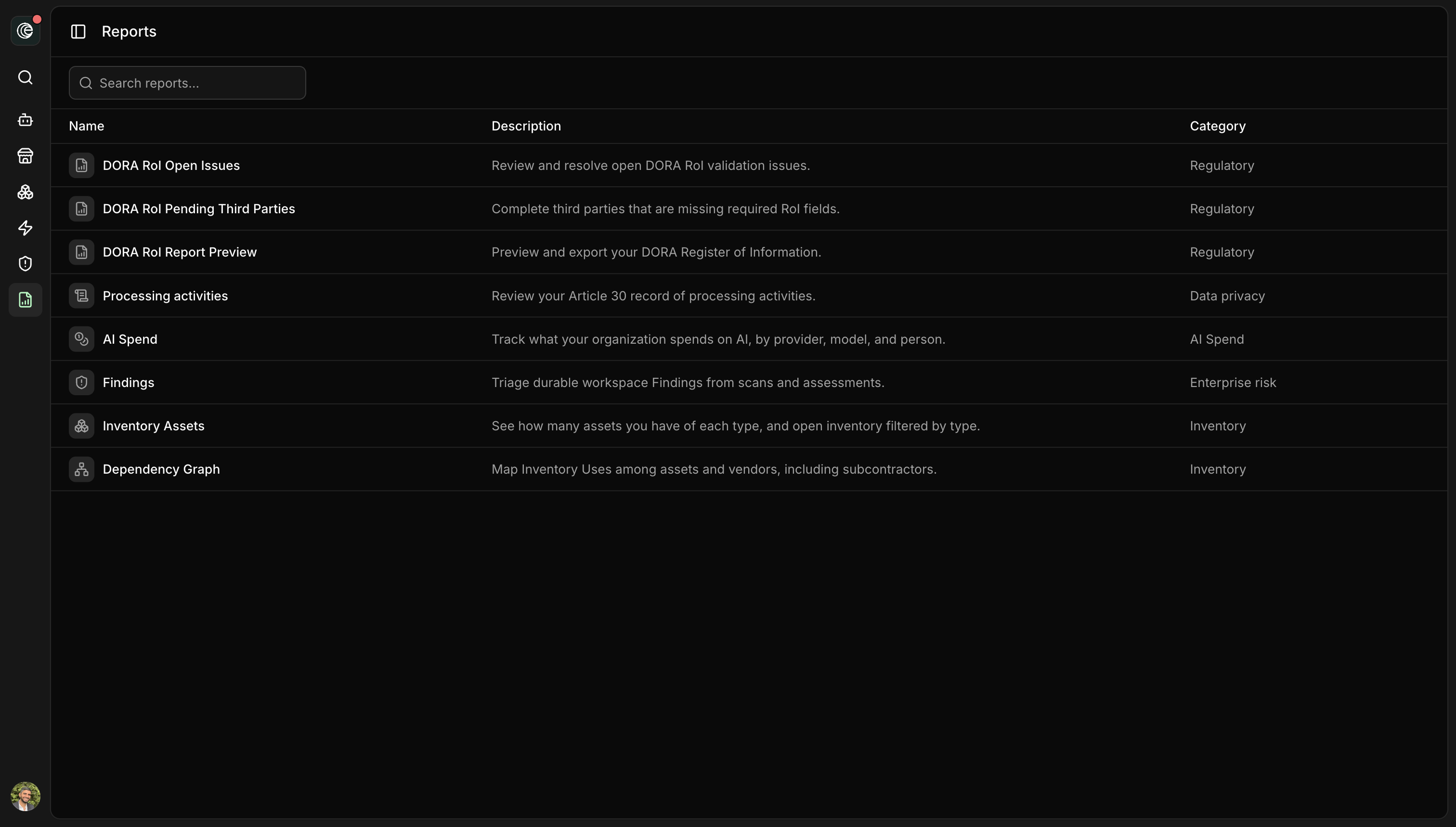
Automation
Automation-ready

Fredrik Gustafson
Head of Product
We built the automation layer on top of the live inventory, not beside it. A run should never start from a spreadsheet export or a frozen snapshot. It should see the same assets, owners, data flows, and findings the rest of Ethira already has, at the moment the work begins.
Events on that graph start the work: a custom finding, a vendor change, or an external signal from outside the estate. From there the next step is ownership, evidence, diligence, or a report, with the full context already attached so nobody has to reconstruct why the run fired or what it saw.
I designed this so teams can change, create, and decommission assets at the pace they now ship, and still follow best practices and rules. Automations are how we keep that path open without killing productivity, and how security, GRC and legal stay current on the same graph while the estate keeps moving.
Get started
See the assets you actually run.
Get a demo of living intelligence on each asset, not just a list of names.